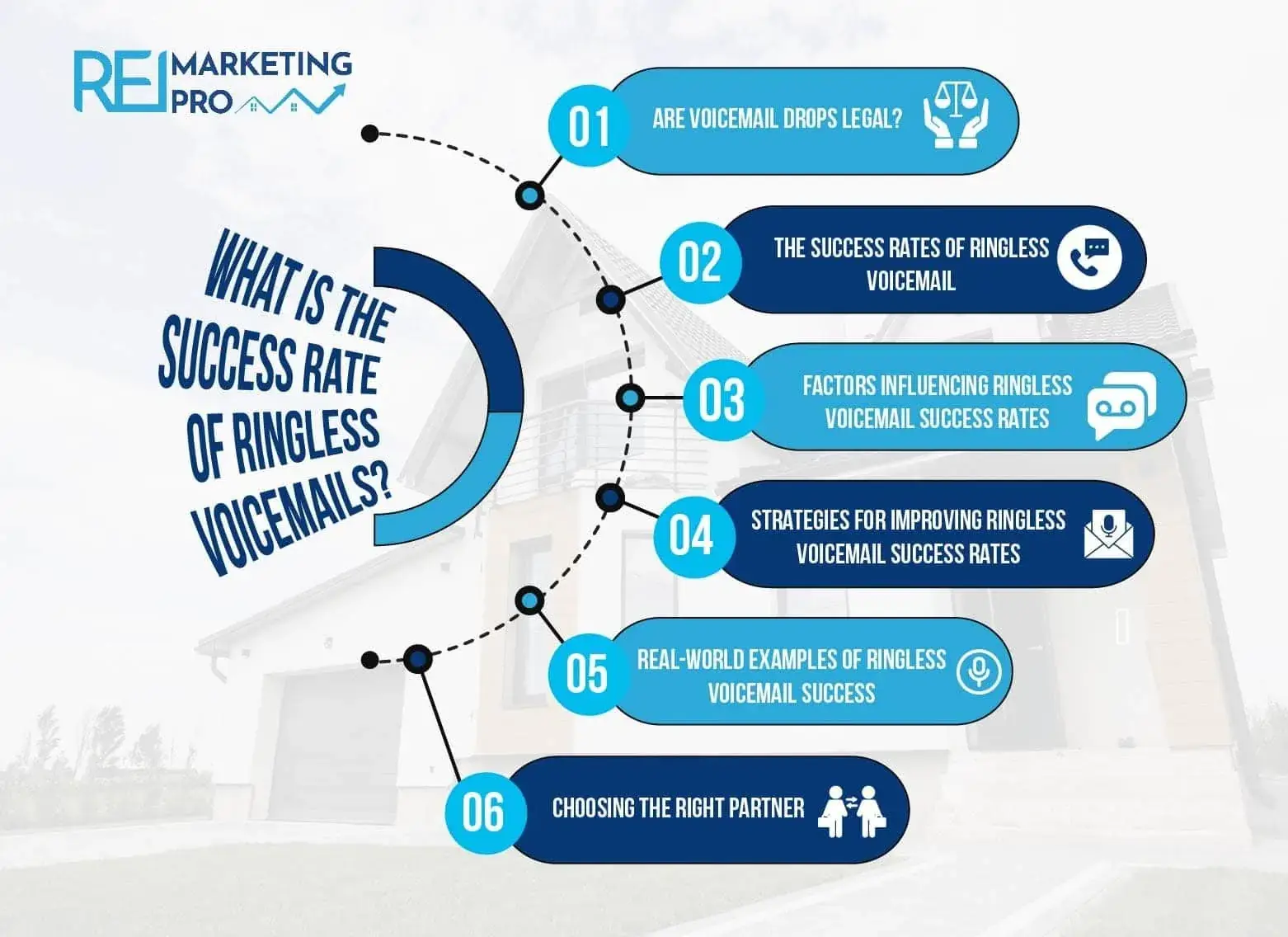
It’s worth mentioning that these high success rates aren’t set in stone. They can change based on a bunch of stuff, like what industry you’re in, who you’re trying to reach, what you’re saying in the message, and overall strategy.
Factors Influencing Ringless Voicemail Success Rates
When it comes to ringless voicemail drops real estate providers’ campaigns work, there are a few essential things to keep in mind:
1. Message Clarity and Relevance
Your message should be relevant and crystal clear to the targeted audience. If your message is not valuable to the targeted audience, they will not even listen. Make sure your message is worthwhile and straight to the point and gives them a reason to pay attention.
2. Frequency and Timing
Sending too many ringless voicemail drops real estate all the time can annoy them and lead to lower response rates. You should have to send a maximum of 2 ringless voicemails per week and avoid bombarding recipients. Plus, sending voicemails at the right time of day can greatly affect their effectiveness.
3. Target Audience
Knowing your audience and their preferences is super important. Some demographics or industries resonate more with ringless voicemails than others. So, it’s worth researching to determine the most responsive target market.
4. Complete Marketing Strategy
And remember, ringless voicemail should be one of many methods of marketing. It’s best used as part of a bigger marketing strategy, including cold calling, direct mail, and text marketing. That way, you’ve got a better chance of getting your targeted audience.
5. Compliance and Regulations
Last but not least, make sure you follow the laws and regulations. There are laws and regulations you’ve got to follow, like the Telephone Consumer Protection Act. Ignoring them could land you in hot water, so it’s best to stay on the right side of the law.
Ideal Ringless Voicemail Response Rates
You’re wondering what a good response rate is for those ringless voicemail campaigns, right? According to our statistics, 10-25% of people response to the message. That’s pretty good!
The important thing to know is that response rates can change depending on different factors. Your industry, your audience, and even the message itself can play into how many people respond. The trick is setting realistic goals and optimizing the campaign based on what’s working and what’s not.
And don’t measure the success of ringless voicemail by only response rates. You also want to check other metrics, like how many people are buying or engaging with your brand because of those voicemails. That’s the real measure of success.
Strategies for Improving Ringless Voicemail Success Rates
To make a ringless voicemail campaign successful, implement all these strategies:
1. Personalization
Don’t send the same message to everyone. Speak directly to their needs and interests. It’ll grab their attention and make them feel like you’re directly talking to them.
2. Compelling Call-to-Action
What do you want them to do after hearing your message? Whether you want them to call you back, visit your website, or sign up for something, make it irresistible.
3. A/B Testing
Not sure which message will work best? Experimenting with different message styles, timings, and calls to action through A/B testing can help you figure out what works best for your audience.
4. Strategic Follow-Up
Don’t forget about follow-ups. Sometimes, people don’t hear your message the first time. Follow up with another voicemail or try a different channel, like SMS marketing, which can make a big difference.
5. Continuous Optimization
Keep an eye on your campaign’s results. What’s working? What needs to be fixed? Use that info to optimize your campaign and keep getting better success rates over time. It’s all about continuous improvement!
By following these tips, you can turn your ringless voicemail campaign into a lead-generating machine!
Case Studies: Real-World Examples of Ringless Voicemail Success
To further illustrate the potential of ringless voicemail, let’s examine a few real-world case studies:
Case Study 1: Real Estate Investor
A real estate investor used a ringless voicemail campaign to reach out to past clients and sell a brand-new luxury home. The marketing campaign led to a 12% response rate, with many clients calling back to express interest in the luxury home. The investor was able to generate several new sales leads and appointments from the campaign.
Case Study 2: Real Estate Agent
A real estate agent executes ringless voicemail campaigns to tell their customers about a brand new house. The marketing campaign did a 15% response rate, with many customers expressing interest and scheduling follow-up meetings with the real estate agent.
Ringless Voicemail Providers: Choosing the Right Partner
Make sure your ringless voicemail campaign hits the mark. It’s crucial to team up with trusted and reliable ringless voicemail providers like REI Marketing Pro. Here’s what you should keep in mind when choosing the right one:
1. Compliance and Regulatory Expertise
The ringless voicemail providers know their stuff regarding compliance and regulations. They should be well-versed in laws like the TCPA and able to guide you through the legal side of campaigns.
2. Technological Capabilities
Next, see what kind of platforms they are using. They should offer user-friendly platforms that offer easy campaign setup, crafting messages, and keeping track of results.
3. Customer Support and Guidance
Customer support is critical in ringless voicemail campaigns. Make sure the ringless voicemail providers offer dedicated support and smart advice to help you fine-tune your campaigns for maximum impact.
4. Track Record and Reputation
If you are looking to purchase ringless voicemail campaigns, you should do some research before purchasing. Look for reviews, case studies, or anything that gives you a sense of how they’ve performed effective ringless voicemail solutions.
5. Scalability and Flexibility
And last but not least, think about the future. You’ll always want a provider who can grow with you, handle big campaigns, and adapt to changing market conditions.